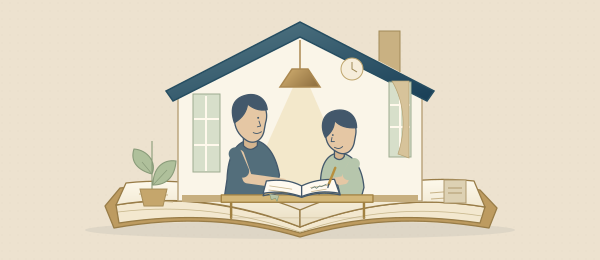
Home is the first school and parents are the first teachers. This is known to all, but practised by few.
A child spends only a few hours a day in school. The rest of the day, and the most impressionable years before school even begins, are spent at home. Long before children enter a classroom, they have learnt how to speak and how to behave with others. Much of this is never taught in words. Children watch how their parents speak to each other, how they treat elders and those who work for them, and whether they keep their word. The environment at home moulds them more deeply than any syllabus can.
Values are a case in point. Many parents rarely take their children to places of worship, share the family's festivals and traditions with them, or sit with them for a prayer. Yet when children grow up unaware of their faith, culture and values, it is the education system that gets the blame.
The same is true of screens. Parents often complain to teachers that their child watches too much television, spends hours on the mobile phone or is lost in games. But it was not the school that put a television in the home or gifted the phone. Those decisions were taken at home, and only parents can regulate their use. Children also copy what they see. Parents who are always on their own phones can hardly expect a child to put one down.
Children need their parents' time as well: someone to help with homework, to listen to the day's happenings and to take an interest in what is being learnt. Where this is missing, the child's development suffers. Equally damaging is the casual remark at home that belittles the school or its teachers. A child who hears school dismissed at the dinner table will not take it seriously in the classroom.
Discipline at home matters too. Parents who do not protect their child's study hours, and take the child along to late-night parties and film shows, send a tired child to school the next morning. The child's performance suffers, and the teacher can do little about it.
None of this is to say that parents have an easy job. In many homes both parents work, days are long and there is pressure from every side. It is understandable that they look to the school for help. But seeking help is not the same as handing over the responsibility. The school and the home have to work together, and the home must do its part.
It does not take much. Parents can eat at least one meal a day with their children, with the television off. They can fix hours for study and for screens, and keep to them. They can read with a young child at bedtime, and meet the teacher not only when there is a complaint. Small habits like these, kept up over the years, do more than any tuition class.
Schools can build on what is laid at home. They cannot replace it. So a proper environment at home is a must for the full development and future of children. If home is to be the first school, parents must accept that they are its first teachers.