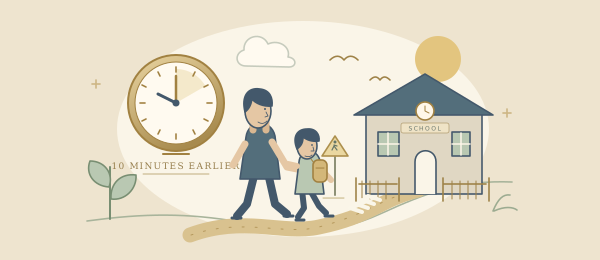
Anyone who goes for a morning walk will see parents in cars and on scooters, hurrying to drop their children at school. For many children, this short ride is the first lesson of the day, though neither parent nor child thinks of it that way.
Watch the traffic at that hour and a pattern appears. Parents who have left home late overspeed to make up the time. Some drive on the wrong side of the road because the U-turn is a little too far. Others keep changing lanes for no reason, and many curse the other drivers as they go. The child sits quietly in the back and takes it in.
If parents think the child will not pick up these habits, they are sadly mistaken. Children pick up such things fast, often faster than anything taught in a classroom. How can a child become a responsible student if the parents do not lead by example?
It usually begins with being late. The child sees that the parent is not on time. The child is taken to school late, rules are broken on the way, and at the gate the parent requests the watchman, or even the teacher, to let the child in. Over time the child picks up these traits and begins to behave the same way. Being late becomes normal, and rules become something to be negotiated at the gate. Most of this could be avoided simply by leaving home ten minutes earlier.
Punctuality is more than a matter of minutes. A child who walks in late misses the start of the lesson, disturbs the class and slowly learns that other people's time does not matter much. A child who arrives on time, without a rush, starts the day settled and ready to learn.
The habits formed on the way to school stay long after school is over. If the parent drives on the wrong side of the road today, can the child be expected to follow the rules when the time comes to get a driving licence?